
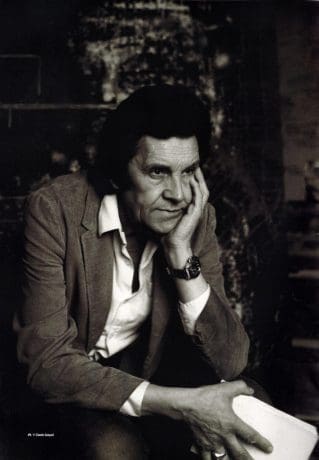
‘Painting is a deadly profession. One way or another, you’ll end up losing your life to it.’ Kijno
FROM ORIGINS TO THE QUEST FOR THE ABSOLUTE
Poet and philosopher at heart, painter Ladislas Kijno was curious about everything. From an early age he drew and painted what surrounded him. His studies at the Baudimont Seminary in Arras and later at the Catholic University of Lille, where Jean Grenier and Gabriel Marcel were among his teachers, led Kijno toward a passion for the absolute.
After a painful mystical and metaphysical crisis, he became seriously ill and was required to spend many stays in a sanatorium at the Plateau d’Assy in Haute-Savoie until 1954. There he met the writer Pierre Marois, who introduced him to the world of Van Gogh, Cézanne and Bonnard. His doctors, Dr. Tobé and Dr. Degeorges, encouraged his early pictorial research.
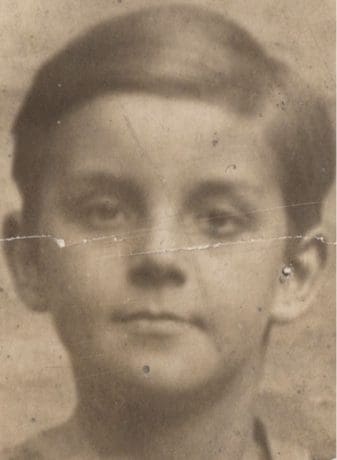
Birth :Ladislas Kijno was born in Warsaw on June 27.
Move to France : The family settled in Nœux-les-Mines in northern France.
Stays at the Sancellemoz sanatorium : Mystical crisis, illness, artistic encounters.
First exhibition : Founding exhibition at the Sancellemoz clinic.
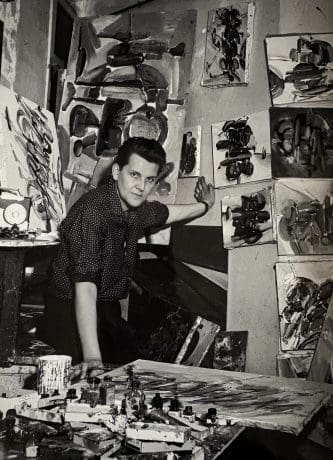
Beginning of the crumpling technique : Research on smooth and crumpled surface interference.
Decisive meeting with Germaine Richier.
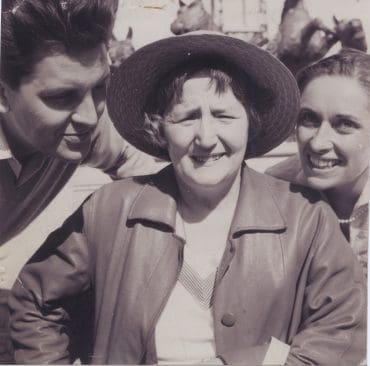
The Last Supper of Assy : Major religious commission.
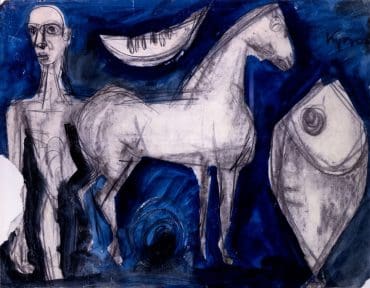
Radical gesture : Burned 200 works : marking artistic renewal.
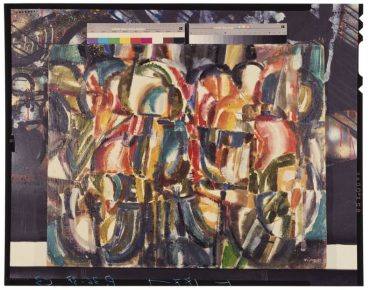
Arrival in Antibes: Meetings with Picasso, the Maeght couple, Alberto Magnelli, Hans Hartung.
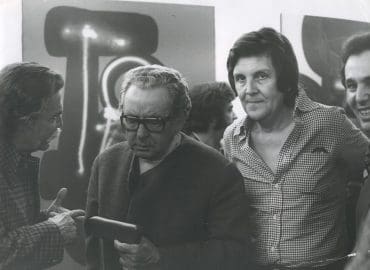
Beginning of the “White Writings”
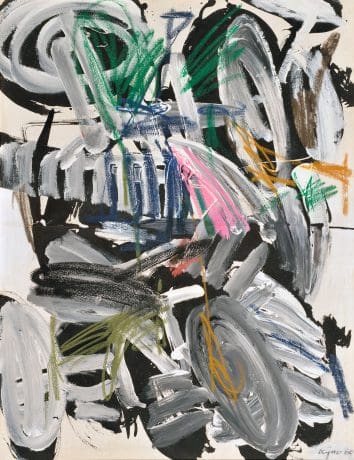
Beginning of the Neruda series.
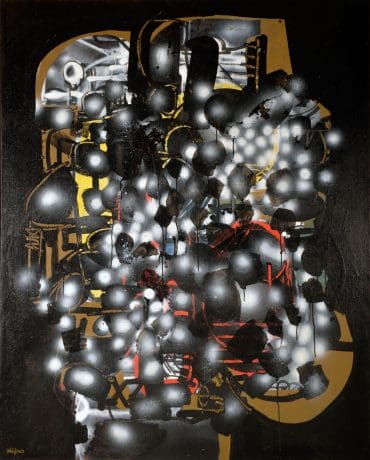
Exhibition at the Venice Biennale.
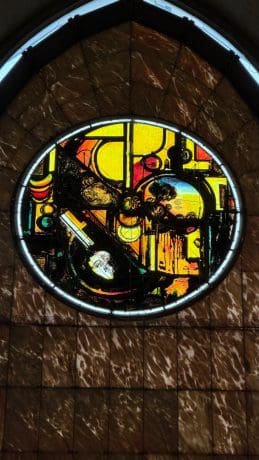
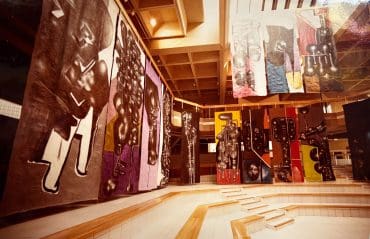
Rose window of Lille Cathedral : Monumental achievement (36 m crumpled paper).
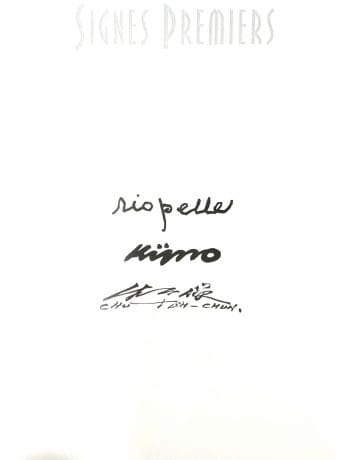
Major traveling exhibition “Signes Premiers” in Canada.
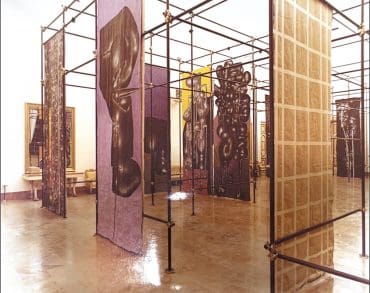
Retrospective at the Museum of Fine Arts in Lille.
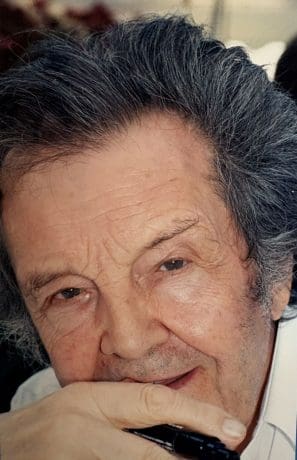
Death : Passed away in Saint-Germain-en-Laye on November 27.
Year of Kijno : Major exhibitions and launch of the catalogue raisonné.
ARTIST’S CATALOGUE RAISONNÉ
The Ladislas Kijno Committee is pleased to announce the preparation of the catalogue raisonné of the artist’s painted work.
For all requests and information, contact: comite@kijno.com
AUTHENTICATION REQUEST
The Ladislas Kijno Committee is available to review any authentication request.
THE PLATEAU D’ASSY PERIOD
He participated in the decoration of the Church of the Plateau d’Assy alongside Fernand Léger, Jean Lurçat, Germaine Richier, Henri Matisse, Georges Braque and Marc Chagall. Kijno created The Last Supper placed in the church crypt.
This marked the beginning of a life entirely devoted to painting. Tireless and prolific, the artist worked in series.
Series and Recognition
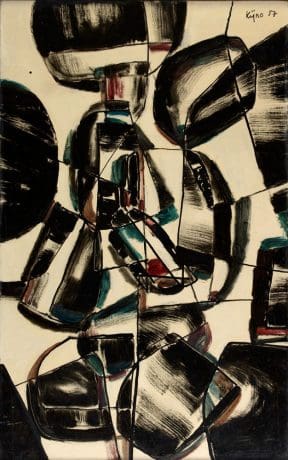
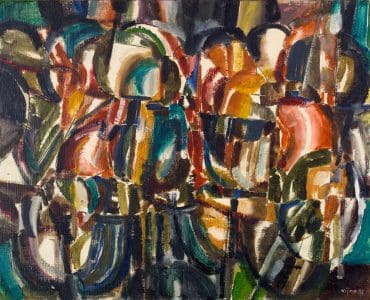
His works from the 1950s — Pebbles, Fig Trees, Interferences — and from the 1960s — White Writings, Arrows, Variations — established him as a major figure of the Second School of Paris.
His first exhibitions in Paris at the Saint Placide, Kamer, Bénézit and Creuzevault, Antonio Sapone and Trigano galleries were public and critical successes.
Our News
Technical Innovations
and Pictorial Research
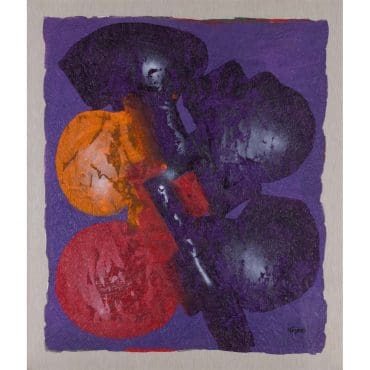
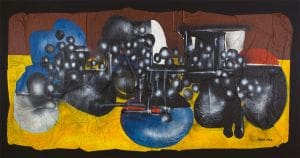
In the late 1940s he developed the crumpled paper technique and later the crumpled canvas technique, adding relief to surfaces — a defining characteristic of his work.
He also created a synthesis between traditional painting techniques and industrial discoveries, particularly in spray techniques and dyes.
Commitment and Humanism
A friend of poets whose texts he often accompanied with paintings and drawings, he paid tribute to personalities he admired — poets, painters, philosophers, musicians.
Deeply humanist and politically engaged, his work denounced wars, defended women’s rights movements, and paid tribute to figures such as Angela Davis, Pablo Neruda and Nelson Mandela — grouped under the term beacons and banners.
A FREE AND PROTEAN BODY OF WORK
Refusing to choose between abstraction and figuration, his work reflects a free and protean artist who marked the second half of the twentieth century.